Quick Navigation
- Why the Crock Pot is the Swiss Steak Secret Weapon
- Choosing Your Beef: The First Critical Step
- The "Swissing" Step: To Pound or Not to Pound?
- The Foundation: A No-Fail Classic Crock Pot Swiss Steak Recipe
- Leveling Up: Pro Tips and Flavor Variations
- Solving Common Swiss Steak Problems
- Wrapping It Up: Why This Method Wins
Let's talk about Swiss steak. You know, that old-school comfort food that your grandma probably made. It's not from Switzerland, by the way—that's a common misconception. It's a method, a way of taking a tougher cut of beef and transforming it into something that melts in your mouth. And honestly, there's no better tool for that job than your trusty crock pot, or slow cooker if you prefer. The low, slow heat coaxes out every bit of flavor and tenderness, turning what could be a chewy disappointment into a Sunday dinner masterpiece. I've made this dish more times than I can count, and I've learned a thing or two about what makes it great and what can go wrong.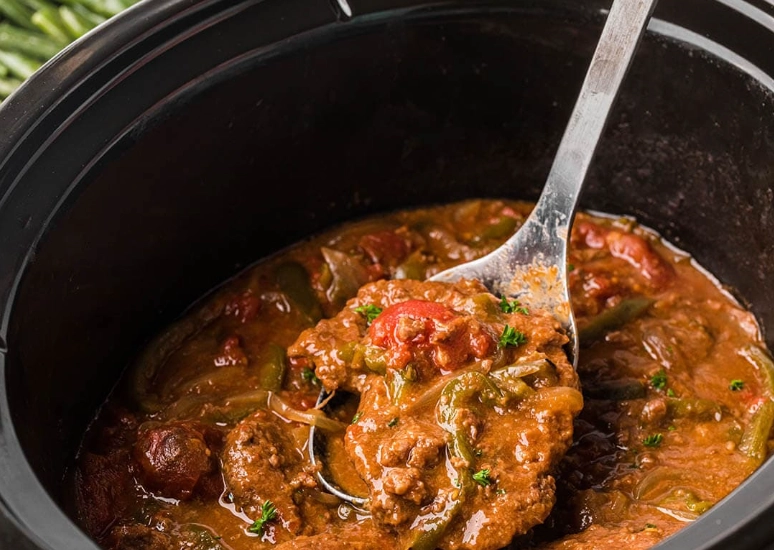
If you're searching for how to cook Swiss steak in a crock pot, you're already on the right track. You're looking for simplicity, reliability, and incredible results. This guide is going to walk you through the whole process, from picking the right piece of meat at the grocery store to serving up a meal that'll have everyone asking for seconds. We'll cover the classic recipe, some fun twists, answer all the common questions, and I'll even share a mistake I made early on that turned my steak into leather—so you don't have to.
Why the Crock Pot is the Swiss Steak Secret Weapon
Before we dive into the how, let's talk about the why. Swiss steak is all about breaking down connective tissue. That tough, chewy stuff that makes cheaper cuts like chuck or round roast affordable is exactly what we're targeting. High-heat, fast cooking would make it worse. But gentle, moist heat over many hours? That's magic. The collagen slowly dissolves into gelatin, which is what gives you that rich, silky mouthfeel and the meat that falls apart with a fork.
I remember trying to make Swiss steak in the oven once, following a complicated recipe that involved braising and checking it every hour. It was fine, but the bottom got a bit too dark, and I was tied to the kitchen. The crock pot method for Swiss steak is the ultimate in "set it and forget it" cooking. You get consistent, even heat without any hot spots. The gravy builds itself from the drippings and the vegetables you add. It's just smarter.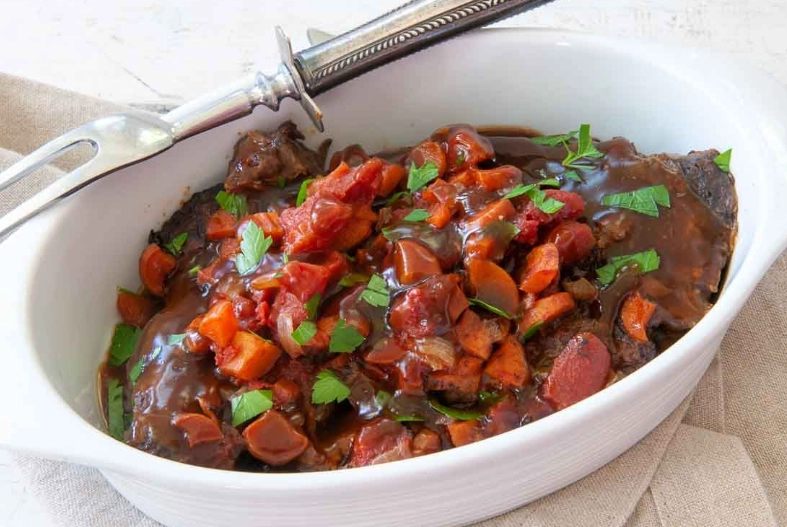
Choosing Your Beef: The First Critical Step
This is where many folks go wrong. You can't just use any steak. Filet mignon? That would be a waste in the slow cooker. You need a cut with lots of flavor and that all-important connective tissue. Here’s a quick breakdown of the best (and worst) choices for your crock pot Swiss steak.
| Cut of Beef | Why It Works (or Doesn't) | My Personal Preference |
|---|---|---|
| Chuck Roast/Steak | The absolute gold standard. Well-marbled, rich in collagen, perfect for long cooking. It shreds beautifully. | Top choice. Affordable and consistently delicious. |
| Round Steak (Top or Bottom) | Very lean, less marbling. Can work but is more prone to drying out if not monitored. Often sold as "Swiss steak" cuts. | Good, but requires extra care with liquid. I often use it if it's on sale. |
| Brisket (Flat Cut) | Excellent flavor and collagen content. Can be thicker, so may need longer time. Makes fantastic shredded meat. | A fantastic, if sometimes pricier, option for a special meal. |
| Sirloin or Ribeye | Don't do it. These are tender, expensive cuts meant for quick cooking. They'll become mushy and lose their texture in the crock pot. | Avoid. Save these for the grill or pan. |
Look for meat that's about 1 to 1.5 inches thick. Too thin, and it might disintegrate. Too thick, and it might need extra time. I usually ask the butcher for a 2-3 pound chuck roast that I can cut into serving-sized pieces myself. It's cheaper that way.
The "Swissing" Step: To Pound or Not to Pound?
Traditional Swiss steak involves physically tenderizing the meat by pounding it with a spiked mallet (called a meat mallet or Jaccard tenderizer). This breaks down some muscle fibers and helps the meat absorb the seasoning and flour coating. Do you have to do it to cook Swiss steak in a crock pot successfully? No. The slow cooking does 95% of the tenderizing work.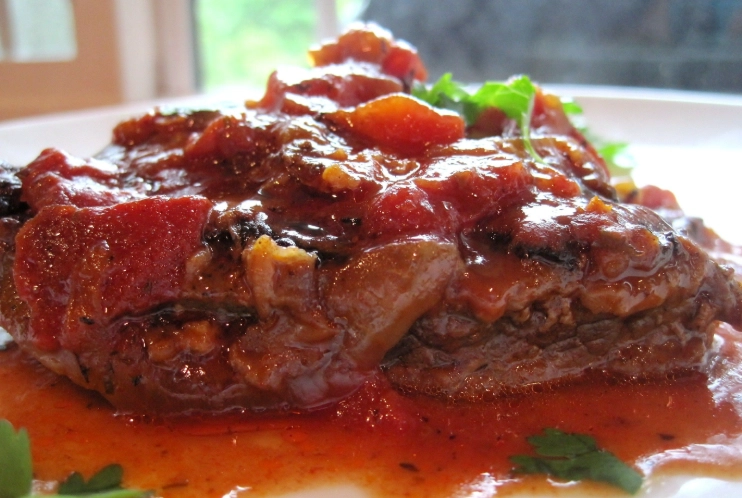
But I still do it. Here's why: it creates little channels for the seasoned flour to stick to, which later helps thicken the gravy in a really natural way. It also makes the pieces a more uniform thickness, so they cook evenly. If you don't have a spiked mallet, you can use a regular smooth one, or even the edge of a heavy plate. Just lay the steak between two pieces of plastic wrap and give it a few good whacks.
Don't go crazy. You're not trying to make it paper-thin, just to dimple the surface and even it out.
The Foundation: A No-Fail Classic Crock Pot Swiss Steak Recipe
Alright, let's get to the main event. This is my go-to, never-fail blueprint for how to cook Swiss steak in a crock pot. It's simple, packed with flavor, and fills your house with an amazing aroma. The key is layering flavors.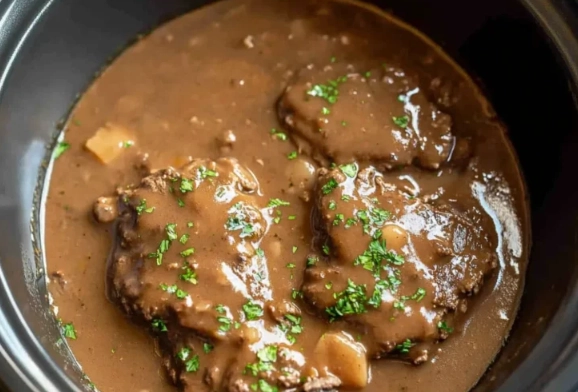
Classic Slow Cooker Swiss Steak
Prep Time: 20 mins | Cook Time: 8 hours on LOW | Serves: 4-6
Ingredients:
- 2-3 lbs beef chuck roast, cut into 4-6 serving pieces
- 1/2 cup all-purpose flour
- 2 tsp paprika (smoked paprika is amazing here)
- 1 tsp garlic powder
- 1 tsp onion powder
- 1 tsp salt
- 1/2 tsp black pepper
- 2-3 tbsp vegetable oil
- 1 large onion, sliced into half-moons
- 2-3 cloves garlic, minced
- 2 stalks celery, chopped
- 2 large carrots, cut into 1-inch chunks
- 1 (14.5 oz) can diced tomatoes, undrained
- 1 cup beef broth (low sodium if possible)
- 2 tbsp Worcestershire sauce
- 1 tbsp tomato paste
- 1 bay leaf
- Fresh parsley for garnish (optional)
The Process:
- Prep the Meat: Pat your beef pieces completely dry with paper towels. This is crucial for getting a good sear. In a shallow dish, mix the flour, paprika, garlic powder, onion powder, salt, and pepper. Dredge each piece of meat in the flour mixture, shaking off the excess. Reserve the leftover flour mixture.
- Sear (The Flavor Booster): This step is optional for the crock pot, but I highly recommend it. Heat the oil in a large skillet over medium-high heat. Sear the meat for 2-3 minutes per side, until a nice brown crust forms. Don't crowd the pan; do it in batches. This isn't to cook the meat through, just to develop deep, rich flavors through the Maillard reaction. Transfer the seared meat to your crock pot.
- Build the Flavor Base: In the same skillet (with all those tasty browned bits), add the onions, garlic, celery, and carrots. Sauté for 5-6 minutes until the onions start to soften. Sprinkle in about 1 tablespoon of your reserved flour mixture and stir for 1 minute. This will cook out the raw flour taste and help thicken the sauce later.
- Deglaze and Combine: Pour in the beef broth and Worcestershire sauce. Scrape the bottom of the pan with a wooden spoon to get all the flavorful bits up (this is called deglazing). Stir in the diced tomatoes and tomato paste. Let it come to a simmer for a minute.
- Slow Cooker Assembly: Pour the vegetable and tomato mixture over the meat in the crock pot. Add the bay leaf. Gently stir to combine, ensuring the meat is mostly submerged in the liquid.
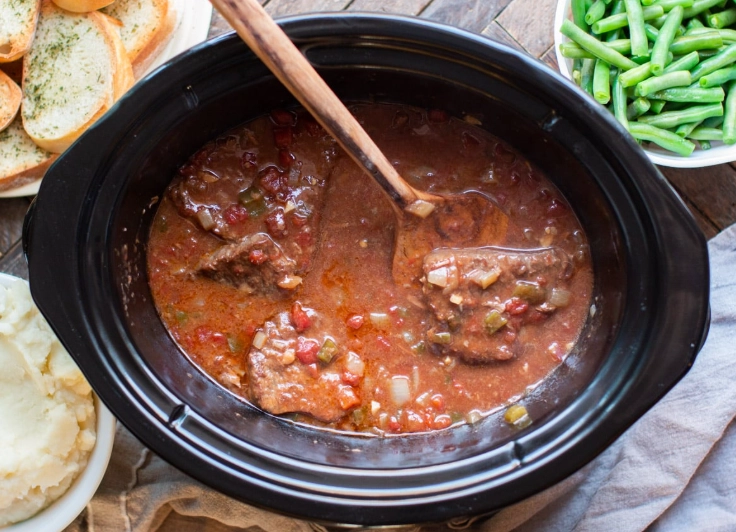
- The Long Wait: Cover and cook on LOW for 7-8 hours, or on HIGH for 4-5 hours. LOW is always better for tenderness. The steak is done when it is fork-tender and easily pulls apart.
- Final Touch: Before serving, taste the gravy and adjust seasoning with more salt and pepper if needed. If the gravy seems too thin, you can mix a tablespoon of cornstarch with two tablespoons of cold water and stir it into the hot liquid in the crock pot. Cook on HIGH for an additional 15-20 minutes until thickened. Remove the bay leaf. Garnish with fresh parsley.
Serve this over a big pile of creamy mashed potatoes, buttered egg noodles, or rice. The gravy is liquid gold.
Leveling Up: Pro Tips and Flavor Variations
Once you've mastered the basic method for Swiss steak in the crock pot, you can start playing around. Here are some ideas I've tried and loved (and one I didn't).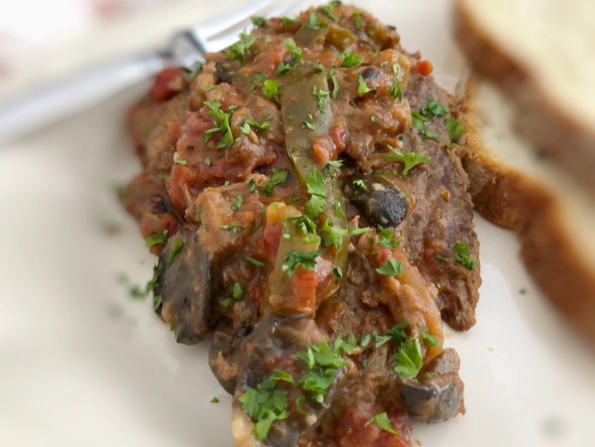
Flavor Twists
- Mushroom & Red Wine: Replace half the beef broth with a dry red wine like Cabernet Sauvignon. Add 8 oz of sliced cremini mushrooms when you sauté the other veggies. It adds a wonderful earthy depth.
- Italian-Style: Swap the paprika for dried oregano and basil. Use a can of fire-roasted diced tomatoes and add a pinch of red pepper flakes. Serve over polenta.
- Smoky & Sweet: Add a tablespoon of soy sauce and a teaspoon of liquid smoke to the broth. Throw in a handful of pitted prunes during the last hour of cooking. They dissolve and add an incredible richness and subtle sweetness that balances the smoke.
Crucial Technique Tips
- Don't Peek! Every time you lift the lid, you release heat and steam, adding 15-20 minutes to your cooking time. Resist the urge.
- Layer Wisely: Place harder vegetables like carrots and potatoes at the bottom, near the heat source, then the meat, then softer veggies like onions on top.
- Fat is Flavor: Don't be too quick to skim the fat from the top of the gravy before serving. That's where a lot of the flavor lives. If there's an excessive amount, you can remove some, but leave a good amount.
Solving Common Swiss Steak Problems
Even with a perfect recipe, things can happen. Here’s how to troubleshoot.
The meat is tough/chewy. This almost always means it hasn't cooked long enough. The collagen hasn't fully broken down. Simply put the lid back on and cook for another 30-60 minutes on LOW. Check again. Low and slow means just that—be patient.
The gravy is too thin. As mentioned in the recipe, a cornstarch slurry is your best friend here. Mix equal parts cornstarch and cold water, stir it in, and let it cook on HIGH for 15-20 mins. You can also remove the meat, pour the liquid into a saucepan, and simmer it rapidly on the stovetop to reduce and thicken.
The gravy is too salty. This is tricky. You can try adding a peeled, raw potato chunk to the crock pot for the last 30 minutes—it can absorb some salt. Or, stir in a teaspoon of brown sugar or a splash of vinegar to balance the flavor. Diluting with a bit of water or unsalted broth is another option, though it weakens the flavor. Prevention is best: use low-sodium broth and season carefully at the end.
Your Swiss Steak Questions, Answered
Wrapping It Up: Why This Method Wins
Learning how to cook Swiss steak in a crock pot isn't just about following a recipe. It's about understanding a cooking principle: tough cuts + low moisture + long time = tender, flavorful magic. It's a technique that saves money (using cheaper cuts), saves time (active prep is minimal), and delivers incredible, consistent results.
It's the kind of meal that feels like a hug. It's unpretentious, deeply satisfying, and feeds a crowd without stress. Whether you stick to the classic recipe or start experimenting with your own variations, the crock pot is your best ally in creating the perfect Swiss steak. So grab that chuck roast, dust off your slow cooker, and get ready for one of the most rewarding dinners you can make with so little effort. You've got this.
And remember, the best part about knowing how to cook Swiss steak in a crock pot is that once you do it, you'll have a go-to, foolproof comfort food recipe for life. Now, go get that meat searing.
Reader Comments