In This Guide
- The Golden Ratio: Your Starting Point for Grape Jelly Chili Sauce Meatballs
- It's Not Just Math: The Science (& Art) of the Sauce
- Beyond the Basics: Expert Adjustments and Flavor Hacks
- Your Meatball Sauce Troubleshooting Guide (FAQ)
- Putting It All Together: A Fail-Safe Method
- Final Thoughts: Your Confidence in the Kitchen
Let's be real. You're here because you've heard about this weird, wonderful, and strangely addictive combination for cocktail meatballs. Maybe it's for a potluck, a game day spread, or just because you're curious. The big question staring you down is: how much grape jelly and chili sauce for meatballs do I actually need?
I remember the first time I was tasked with making these for a family gathering. My aunt swore by the recipe but her instructions were, "Oh, you know, a jar of jelly and a bottle of sauce." Not helpful when you're staring at shelves of different sized jars. I messed it up. The first batch was cloyingly sweet, the next was mouth-puckeringly sharp. It took a few tries (and some disappointed taste-testers) to lock it down.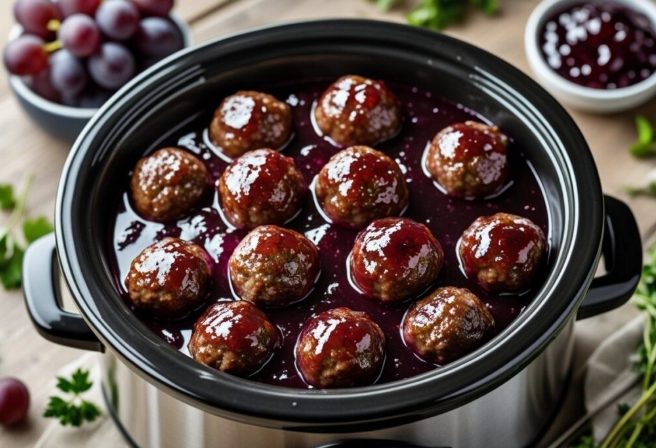
So here's the deal. I'm not just going to give you a single ratio and send you on your way. That's what most recipes do, and it's why people end up with sauce that's too thin, too thick, too sweet, or just… off. We're going to dig into the why behind the amounts, how to adjust for your crowd, and how to fix it if it goes wrong. This is the guide I wish I'd had.
The Golden Ratio: Your Starting Point for Grape Jelly Chili Sauce Meatballs
Alright, let's cut to the chase. The classic, most common, and generally foolproof ratio for grape jelly and chili sauce for meatballs is:
This 1:1 ratio is the backbone of the recipe. It creates that iconic sweet, tangy, and slightly spicy glaze that clings perfectly to meatballs. The chili sauce I'm talking about here is the American-style condiment, like Heinz Chili Sauce, which is more like a smooth, spiced ketchup than a fiery Asian chili paste. Don't mix those up—big difference!
But why this amount? Think of it as a balancing act. The grape jelly brings the sugar and body, helping the sauce thicken as it simmers. The chili sauce brings vinegar, tomato flavor, and a subtle heat. One without the other is just… wrong. This ratio gets you in the ballpark for about 2 pounds of frozen, pre-cooked meatballs, which is standard for a party appetizer.
Here’s a quick reference table for scaling up or down. This is based on using the standard 1:1 ratio as your foundation.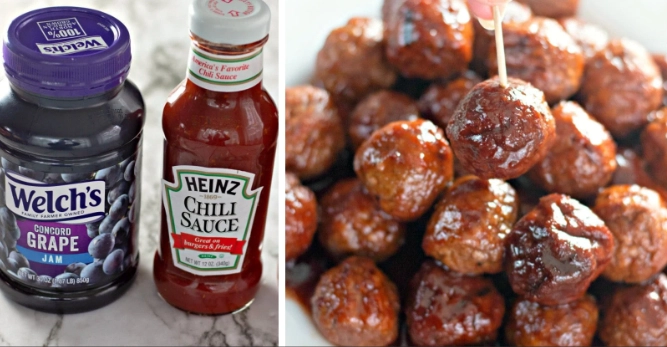
| Meatball Quantity (Frozen, 1-oz size) | Grape Jelly Needed | Chili Sauce Needed | Total Sauce Yield | Best For |
|---|---|---|---|---|
| 1 lb (approx. 16-20 meatballs) | 1/2 cup | 1/2 cup | ~1 cup | Small family dinner |
| 2 lbs (approx. 32-40 meatballs) | 1 cup | 1 cup | ~2 cups | Standard party tray |
| 4 lbs (approx. 64-80 meatballs) | 2 cups (or one 18oz jar) | 2 cups (or one 24oz bottle) | ~4 cups | Large gathering, potluck |
| 5 lbs (for a crowd) | 2.5 cups | 2.5 cups | ~5 cups | Big event, buffet |
See? It scales pretty linearly. The key thing most people forget is that you need enough sauce to generously coat the meatballs and have a little extra in the bottom of the slow cooker or dish for dipping. Nobody likes a dry meatball.
It's Not Just Math: The Science (& Art) of the Sauce
If cooking were just following ratios, we'd all be robots. The truth about figuring out how much grape jelly and chili sauce for meatballs you need depends on a few variables you control. Let's break them down.
Factor 1: The Size and Type of Your Meatballs
Are you using those tiny, one-bite cocktail meatballs? Or are you making bigger, homemade beef or turkey meatballs? Surface area matters. Smaller meatballs have more total surface area to cover per pound, so they might need a touch more sauce relative to their weight. Homemade meatballs often release fat and juices into the sauce as they cook, which can thin it out slightly. My rule of thumb? If you're using larger or homemade meatballs, lean towards the higher end of the sauce amount in the table. It's easier to reduce a little extra sauce than to try to stretch a skimpy one.
Factor 2: Your Cooking Vessel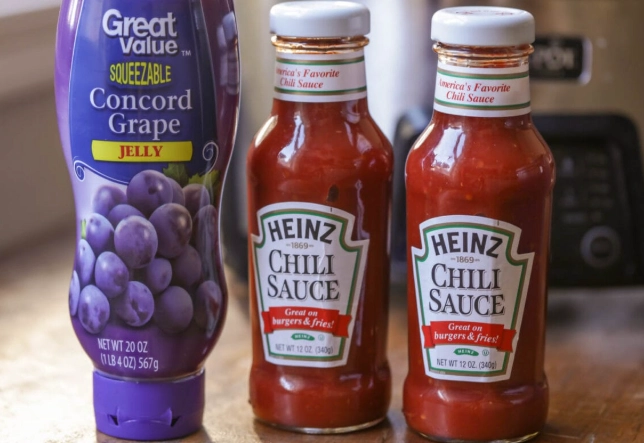
A wide, shallow pan in the oven will cause sauce to reduce and thicken faster due to more evaporation. A slow cooker on LOW, covered, creates a steamy environment with less evaporation. For a slow cooker, I sometimes reduce the liquid by a tablespoon or two of each ingredient to account for the fact it won't reduce much. For the oven or stovetop, the standard ratio is perfect because the simmering will concentrate the flavors beautifully.
Factor 3: Personal Taste (This is the Big One)
Here’s where you become the chef. The 1:1 ratio is a consensus, not a commandment.
- Like it sweeter? Try 1.25 cups jelly to 1 cup chili sauce.
- Prefer more tang and spice? Try 1 cup jelly to 1.25 cups chili sauce.
- Some folks even swear by a 2:1 ratio (jelly to sauce) for a very sweet glaze, but I find that a bit much—it starts to taste like candy. But your kitchen, your rules.
Beyond the Basics: Expert Adjustments and Flavor Hacks
Once you've mastered the basic amounts for grape jelly and chili sauce meatballs, you can start playing. These adjustments answer the "what if" questions that pop up.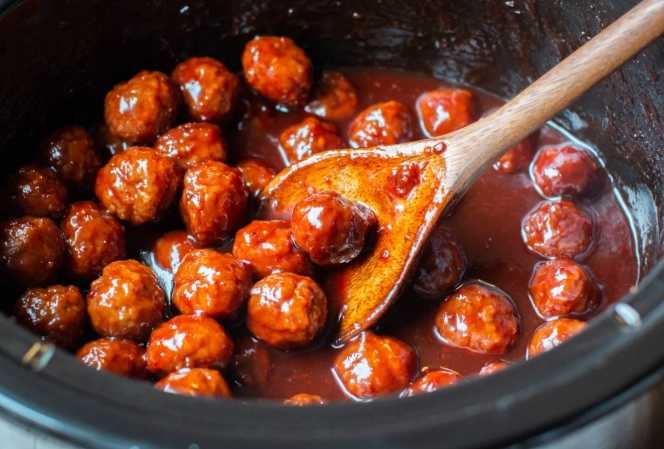
What if I Don't Have Grape Jelly?
You can use other jellies and preserves. The amount will be similar, but the flavor profile changes.
- Apple Jelly: Very similar mild sweetness. Use a 1:1 ratio.
- Apricot or Peach Preserves: These have fruit chunks and are often sweeter. You might want to use slightly less (maybe 3/4 cup) to 1 cup chili sauce to avoid overpowering sweetness.
- Red Currant Jelly: A more tart, sophisticated option. A 1:1 ratio works, but be prepared for a less sweet, more grown-up flavor. It's fantastic.
What if I Want More Complexity?
The beauty of this sauce is its simplicity, but a few additions can elevate it without complicating it. Add these to your standard 1-cup-each mixture:
- A tablespoon of soy sauce or Worcestershire sauce for depth and umami.
- A teaspoon of minced garlic or garlic powder.
- A few dashes of hot sauce (like Tabasco) if your chili sauce isn't spicy enough for you.
- A tablespoon of Dijon mustard for a nice tangy kick.
I sometimes add a splash of apple cider vinegar if I'm using a very sweet jelly, just to cut through it. Trust your palate.
Your Meatball Sauce Troubleshooting Guide (FAQ)
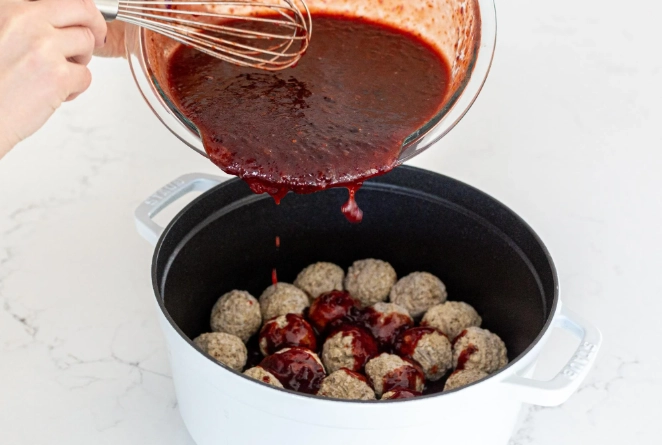
Probably didn't simmer it long enough. The magic happens when the water from the jelly evaporates, leaving the pectin and sugar to create a thick glaze. If your meatballs are swimming, take them out with a slotted spoon, crank the heat to medium-high, and let the sauce bubble and reduce for 5-10 minutes until it coats the back of a spoon. Then add the meatballs back in. Also, ensure you're using "jelly" and not "jam" or "preserves" for your first attempt, as they have more pectin and less fruit pulp, leading to a clearer, thicker set.
You reduced it too much or had the heat too high. No problem. Just stir in a small amount of water, broth, or even a bit of orange juice, one tablespoon at a time, until it loosens to your desired consistency. It will thin out a bit once everything is heated through together.
Absolutely. In fact, the flavors meld and improve. Combine the jelly and chili sauce in a saucepan, heat until smooth, then let it cool and store it in the fridge for up to 5 days. When you're ready, pour it over your meatballs in a slow cooker or baking dish and heat until bubbly. For food safety guidelines on storing cooked meat mixtures, the USDA's Food Safety and Inspection Service provides clear advice on safe temperatures and storage times, which is a good resource to check.
You can use sugar-free grape jelly and a lower-sodium chili sauce. The amounts stay the same. Be aware that sugar-free jellies sometimes behave differently when heated and may not thicken identically. For a from-scratch take, you could simmer tomato paste, vinegar, sweetener, and spices, but at that point, you're making a different sauce altogether. The charm of this recipe is its convenience.
Yes, and they're often better! Brown your homemade meatballs well in a skillet first. This creates a flavorful crust (the Maillard reaction, as food science sites like Serious Eats often explain) and renders fat. Pour off excess fat, then add your sauce to the skillet and simmer until the meatballs are cooked through and the sauce is glossy. You may need a touch more sauce as homemade ones aren't pre-cooked.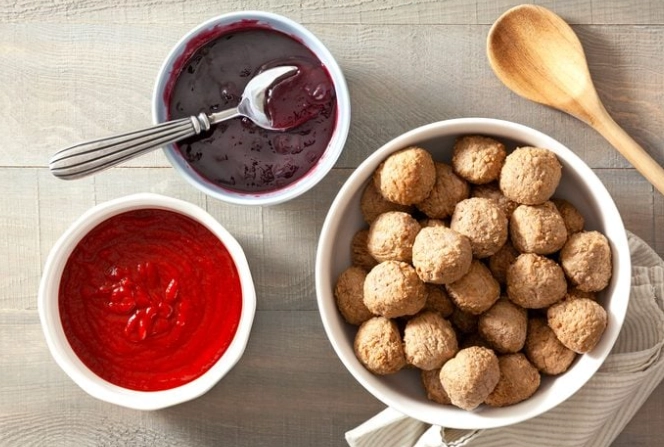
Putting It All Together: A Fail-Safe Method
Let's walk through the process, focusing on the amounts and the "why" at each step. This is my go-no method for perfect results every single time.
- Choose your quantity. Based on the table above, measure out your grape jelly and chili sauce. I start with the 1:1 ratio for 2 lbs of meatballs as my default.
- Make the sauce separately. In a medium saucepan over medium heat, combine the jelly and chili sauce. Whisk until the jelly is fully melted and the mixture is smooth and homogeneous. Let it simmer gently for 2-3 minutes. Taste it. Adjust if needed.
- Combine and cook. Place your frozen (or pre-browned homemade) meatballs in your slow cooker or baking dish. Pour the warm sauce over them, stirring gently to coat.
- Cook low and slow. In a slow cooker: 3-4 hours on LOW. In the oven: Covered at 350°F (175°C) for about 45-60 minutes, stirring once or twice.
- Final check. The sauce should be bubbly, thickened, and cling to the meatballs. If it's too thin, uncover and cook for another 15-30 minutes to reduce. If it's perfect, serve it straight away.
The most common mistake is dumping everything in the slow cooker cold and expecting it to meld perfectly. Taking that extra five minutes to meld the sauces in a pan first makes a world of difference in flavor and consistency.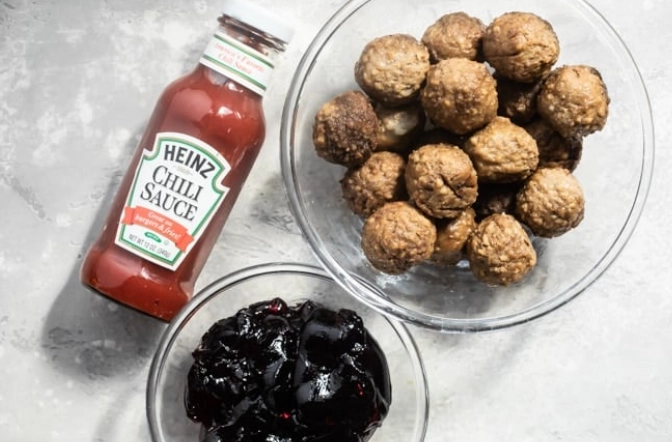
Final Thoughts: Your Confidence in the Kitchen
So, the next time you're wondering how much grape jelly and chili sauce for meatballs to use, remember this: start with the 1:1 ratio for your crowd size, but don't be a slave to it. The real answer lies in understanding that it's a flexible, forgiving formula designed for ease and great flavor.
It's a recipe that has survived decades of potlucks for a reason—it works. And now, you know not just the amounts, but the logic behind them. You can scale it, adjust it, and save it if it goes sideways. That's the mark of a good cook, not just a recipe follower.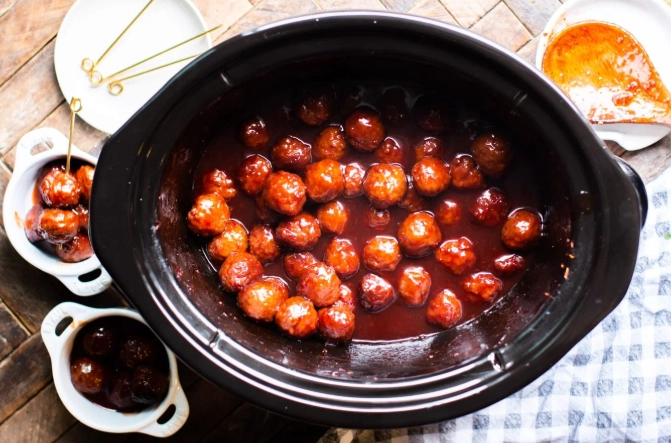
Go forth and make those meatballs. Your guests will ask for the recipe, and you can just smile and say, "Oh, it's a little of this, a little of that." But we'll both know the real secret.
Reader Comments