Let's talk about the classic crockpot chicken stew. It's not just a meal; it's a warm hug at the end of a long day, a solution for busy weeknights, and a guaranteed crowd-pleaser. I've been making variations of this stew for over a decade, tweaking and testing to find what I believe is the perfect balance of simplicity and deep, satisfying flavor. The beauty of this recipe lies in its flexibility and forgiving nature. You can throw it together in 15 minutes in the morning and come home to a house that smells like a grandmother's kitchen (the good kind). But here's the thing most recipes won't tell you: getting that rich, glossy gravy and perfectly tender chicken without mushy vegetables requires a couple of non-negotiable steps. Skip them, and you'll have a watery soup with stringy meat. Follow them, and you'll have a stew worthy of its "classic" title.
What You'll Find in This Stew Guide
The Foundation: Ingredients That Matter
You can't build a great stew with mediocre ingredients. This isn't about being fancy; it's about choosing items that hold up to long, slow cooking and contribute real flavor. Here’s your shopping list, broken down by purpose.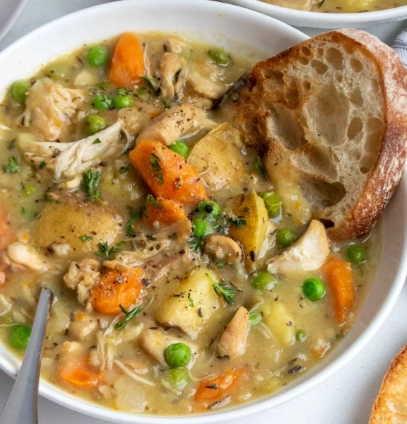
| Ingredient | Quantity | Why It's Here & Pro Tips |
|---|---|---|
| Boneless, Skinless Chicken Thighs | 2 lbs (about 6-8 thighs) | Non-negotiable for classic stew. Thighs stay juicy and flavorful for hours. Breast meat will dry out. Trim excess fat, but don't go crazy—some fat means flavor. |
| Yukon Gold Potatoes | 1.5 lbs, 1.5-inch chunks | They hold their shape better than Russets and have a buttery texture. Don't cut them too small, or they'll dissolve. |
| Carrots & Celery | 3 large carrots, 3 stalks celery, 1.5-inch pieces | Classic aromatics. Cut them slightly larger than the potatoes so they finish cooking at the same time. |
| Yellow Onion | 1 large, diced | The flavor base. A sweet onion works too. |
| Low-Sodium Chicken Broth | 4 cups | Controls saltiness. I prefer Swanson or a good homemade stock. Avoid "no-salt-added"—it tastes flat. |
| Tomato Paste | 2 tablespoons | The secret weapon for depth. Don't skip it. Sauté it with the onions for 60 seconds to remove the tinny taste. |
| All-Purpose Flour | 3 tablespoons | For thickening the gravy. Tossing the chicken in it before cooking is the key to a rich, not gloopy, sauce. |
| Garlic, Thyme, Bay Leaf | 4 cloves garlic (minced), 1 tsp dried thyme (or 3 sprigs fresh), 1 bay leaf | The flavor trifecta. Dried thyme is fine here—the long cook time infuses it perfectly. |
| Frozen Peas | 1 cup | Added at the very end for a pop of color and sweet freshness. Canned peas turn to mush. |
Pro-Tip on Broth: If you only have regular broth, use it but do not add any additional salt until the very end of cooking. The flavors concentrate as the liquid reduces.
The Step-by-Step Process (Beyond Dump-and-Go)
Yes, you can just dump everything in. The result will be edible. But for a stew that makes people ask for the recipe, invest 10 extra minutes in these steps.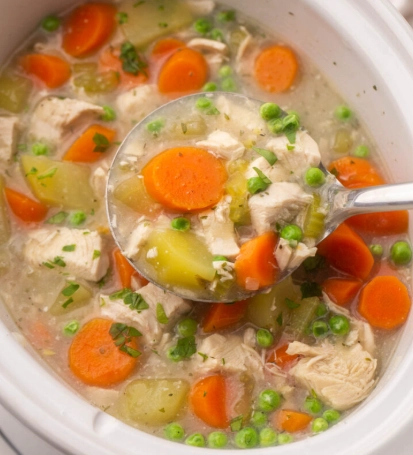
1. The Flour Toss (The Gravy Maker)
Pat your chicken thighs dry with a paper towel. This is crucial—wet chicken won't brown and the flour will become paste. Place the chicken in a bowl, sprinkle with the flour, a pinch of salt, and black pepper. Toss until each piece is lightly coated. This coating does two things: it creates a light sear when it hits the hot pan (adding flavor), and it dissolves slowly into the broth, thickening it evenly without lumps.
2. The Quick Sauté (5 Minutes for Maximum Flavor)
Heat a tablespoon of olive oil in a large skillet over medium-high heat. Add the floured chicken and sear for about 2 minutes per side. You're not cooking it through, just getting some golden color. Transfer the chicken to the crockpot. In the same skillet, add the diced onion. Cook for 3-4 minutes until softened. Add the tomato paste and garlic, cook for another 60 seconds until fragrant. Scrape this entire mixture into the crockpot—all those browned bits (the fond) are liquid gold.
3. The Slow Cook (Setting Matters)
Add the potatoes, carrots, celery, thyme, bay leaf, and broth to the crockpot. Stir gently to combine. The liquid should just barely cover the ingredients. If it doesn't, add a splash more broth or water.
Cook on LOW for 7-8 hours or on HIGH for 4-5 hours. I strongly prefer LOW. The gentle heat makes the chicken impossibly tender and allows the vegetable flavors to meld perfectly. High heat can sometimes make the chicken a bit stringy.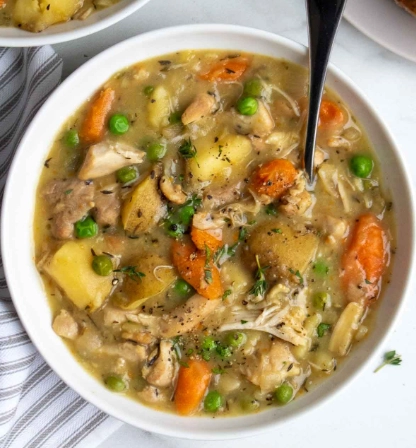
The One Common Mistake That Ruins Texture
Here's the expert insight most blogs miss: When you add your peas (or any delicate vegetable like green beans or corn) is critical. If you add them at the beginning, they will overcook, lose all color, and turn the stew's liquid a murky green. The texture becomes unpleasant.
The fix is simple. About 15-20 minutes before you plan to eat, stir in the frozen peas. Put the lid back on and let the residual heat cook them through. This preserves their bright green color and sweet pop. It's a small step with a massive impact on the final presentation and mouthfeel.
Safety Note: According to USDA food safety guidelines, ensure your stew reaches an internal temperature of 165°F (74°C) before serving. A good slow cooker will do this easily on the recommended settings.
Flavor Variations: One Base, Endless Possibilities
The recipe above is your perfect classic. But what if you want a different vibe? Use the same foundational method and swap a few ingredients. Here are three winner variations I make regularly.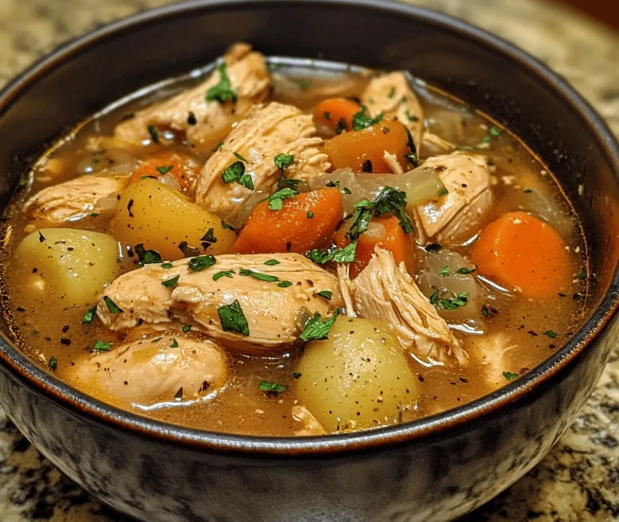
Herb & White Wine Variation
Replace 1 cup of the chicken broth with 1 cup of dry white wine (like Sauvignon Blanc). Add 1 tablespoon of Dijon mustard and a sprig of rosemary along with the thyme. The wine adds a lovely acidity that brightens the whole dish.
Hearty Mushroom & Barley Variation
Reduce potatoes to 1 lb. Add 8 oz of sliced cremini mushrooms (sauté them with the onions) and ½ cup of pearl barley. You may need to add an extra ½ cup of broth as the barley absorbs liquid. This version is incredibly filling and has an earthy, savory depth.
Creamy Coconut & Curry Variation
This is a family favorite. Omit the tomato paste and thyme. When sautéing the onions, add 1 tablespoon of curry powder (or garam masala) with the garlic. Use only 3 cups of broth. In the last 30 minutes of cooking, stir in one 13.5oz can of full-fat coconut milk. The result is rich, aromatic, and completely different.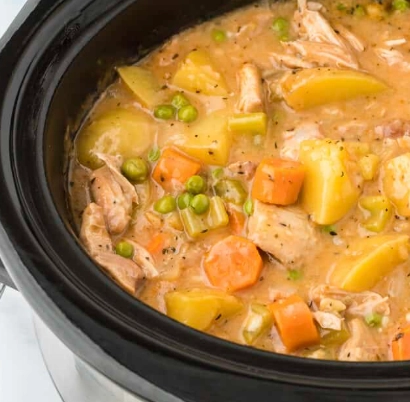
Serving, Storing, and Reheating Like a Pro
Serve your stew in deep bowls. It's fantastic on its own, but a chunk of crusty bread for dipping is never wrong. For a fresh contrast, top with a sprinkle of chopped fresh parsley.
Storing: Let the stew cool to room temperature (but don't leave it out for more than 2 hours). Transfer to airtight containers. It will keep in the fridge for 3-4 days. The flavor often improves on day two.
Freezing: This stew freezes beautifully for up to 3 months. I freeze it in individual portions for easy lunches. Thaw overnight in the fridge.
Reheating: Reheat gently on the stovetop over medium-low heat, stirring occasionally. If it seems too thick, add a tablespoon or two of water or broth. You can microwave it, but stir it well halfway through to avoid hot spots.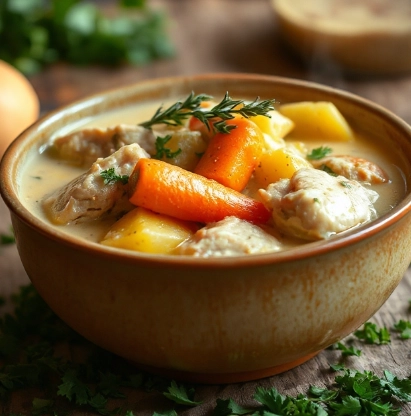
Your Stew Questions, Answered
My crockpot chicken stew always turns out too watery. How do I fix it and thicken it properly?
Watery stew usually means not enough thickening agent or too much liquid. First, make sure you're using the flour-toss method on the chicken—it's the primary thickener. If it's still thin at the end, create a slurry. Mix 2 tablespoons of cornstarch with 3 tablespoons of cold water until smooth. Stir this into the hot stew, set the crockpot to HIGH, and cook uncovered for 15-20 minutes until thickened. Don't add dry cornstarch directly, it will clump.
Can I use chicken breasts instead of thighs for a healthier classic chicken stew?
You can, but you'll sacrifice texture and flavor. Breasts lack the fat and connective tissue of thighs, so they almost always become dry and stringy after hours in the slow cooker. If you must use breasts, cut them into large 2-inch chunks and reduce the cook time to 3-4 hours on LOW. Check for doneness early. Honestly, I'd rather use thighs and skim any excess fat off the top at the end—you'll have a much more satisfying meal.
I want to prep my crockpot chicken stew the night before. What's the safest way to do this?
The safest method is the "overnight fridge" prep. Do all your chopping and place the raw vegetables, herbs, and floured chicken in the crockpot's ceramic insert. Cover it tightly and refrigerate overnight. In the morning, take the insert out, let it sit on the counter for 10-15 minutes (to avoid thermal shock), then add your cold broth and start cooking. Never store a fully assembled, liquid-filled crockpot insert in the fridge—it's too heavy and risks cracking, and the food in the center may not cool safely.
My potatoes and carrots are still hard after 8 hours. What went wrong?
This points to an underpowered slow cooker or one that runs cool (common in older models). First, ensure you cut your vegetables uniformly, no larger than 1.5 inches. If they're consistently hard, your cooker's LOW temperature might be below 185°F, the threshold where vegetables soften. Try cooking on HIGH next time, or pre-boil the potatoes and carrots for 5 minutes before adding them to the pot to give them a head start.
Is it okay to leave my classic chicken stew in the crockpot on "warm" for a few extra hours after it's done?
Most modern slow cookers have a "warm" setting that maintains a food-safe temperature above 140°F. It's generally safe for 1-2 hours. Beyond that, the quality declines—the vegetables continue to soften and can become mushy, and the chicken may start to overcook. For best results, transfer the stew to a different container if you need to hold it for more than two hours after the cooking cycle ends.
Reader Comments