Your slow cooker just died, or maybe you forgot to start it this morning. Dinner plans are in jeopardy, but your oven is sitting there, ready to go. The big question hits you: how long do I cook this in the oven instead? Throwing a slow cooker recipe into a hot oven without a plan is a fast track to dry, tough meat or an undercooked mess.
I've been converting slow cooker recipes to oven methods for over a decade, catering for large groups and fixing more than my share of kitchen mishaps. The secret isn't a single magic number—it's understanding the core cooking method and adjusting the environment. Let's cut through the guesswork.
What You'll Find in This Guide
It's Not About Time, It's About Method: Braising
Here's the non-consensus point most blogs miss: A slow cooker doesn't have a unique cooking method. It's just an appliance that performs one method exceptionally well—moist-heat braising.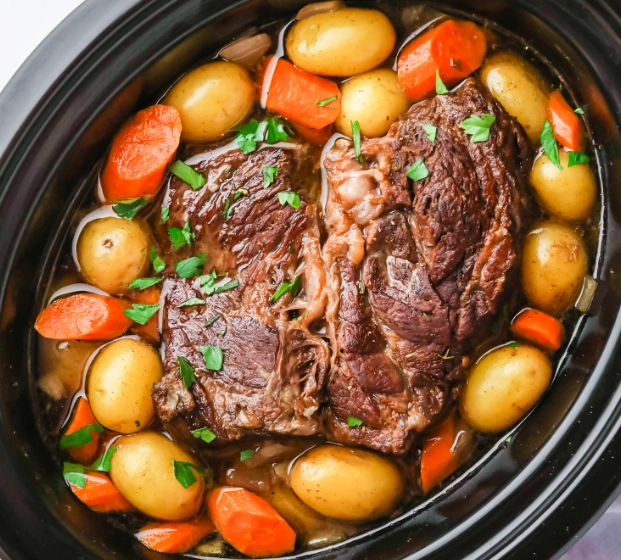
Braising involves browning food, then simmering it gently in a covered pot with liquid. The slow cooker does this at a low, steady temperature (around 190°F to 210°F on Low) for a very long time. Your oven can replicate this environment almost exactly. So when you ask "how long in the oven," you're really asking: "What's the oven time and temperature for a braise?"
Once you grasp that, the conversion becomes logical, not mystical.
The Universal Slow Cooker to Oven Conversion Formula
Forget searching for a specific recipe match. Use this foundational formula:
Slow Cooker (Low for 8 hours) ≈ Oven at 300°F to 325°F for 2.5 to 4 hours.
Slow Cooker (High for 4-6 hours) ≈ Oven at 325°F to 350°F for 1.5 to 3 hours.
Why the range? It depends entirely on the size and type of protein. A big pork shoulder needs the longer, lower end. Chicken thighs might be done at the shorter, higher end. The key is that oven cooking is significantly faster because the ambient temperature is higher and more direct.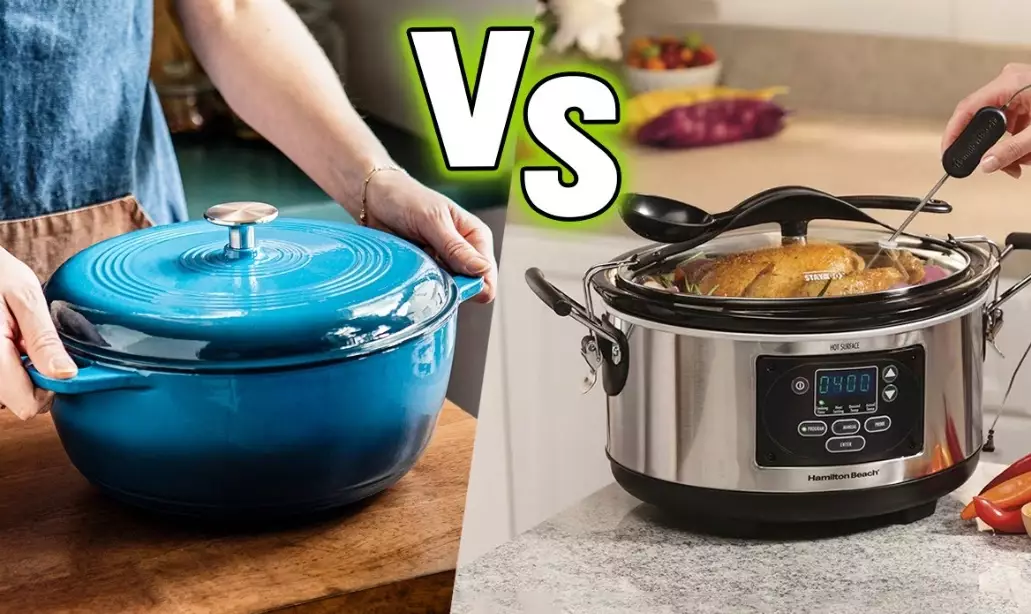
Meat-Specific Oven Time & Temperature Chart
This chart translates common slow cooker targets into actionable oven instructions. Assume all items are browned first and cooked in a covered, oven-safe pot or Dutch oven with at least 1-2 cups of braising liquid.
| Slow Cooker Recipe | Recommended Oven Temp | Estimated Oven Time | Target Internal Temp & Doneness Cue |
|---|---|---|---|
| Beef Chuck Roast (3-4 lbs) | 300°F - 325°F | 3 - 4 hours | 205°F; meat shreds easily with a fork. |
| Pork Shoulder/Butt (4-5 lbs) | 300°F | 4 - 5 hours | 200°F - 205°F; bone pulls out cleanly. |
| Pork Loin (2-3 lbs) * | 325°F | 1.5 - 2.5 hours | 145°F (followed by rest). More lean, so check earlier. |
| Chicken Thighs (bone-in, 2 lbs) | 350°F | 1 - 1.5 hours | 175°F+; meat falls off the bone. |
| Whole Chicken (4 lbs) | 350°F | 1.5 - 2 hours | 165°F in the thickest part of the thigh. |
| Beef Stew Meat (1-inch cubes, 2 lbs) | 325°F | 2 - 2.5 hours | Meat is tender when pierced with a fork. |
| Lamb Shanks (4 medium) | 325°F | 2.5 - 3 hours | Meat is pulling away from the bone. |
*Note: Pork loin is a leaner cut. Cooking it like a fatty shoulder for 4 hours will destroy it. This is a classic conversion error.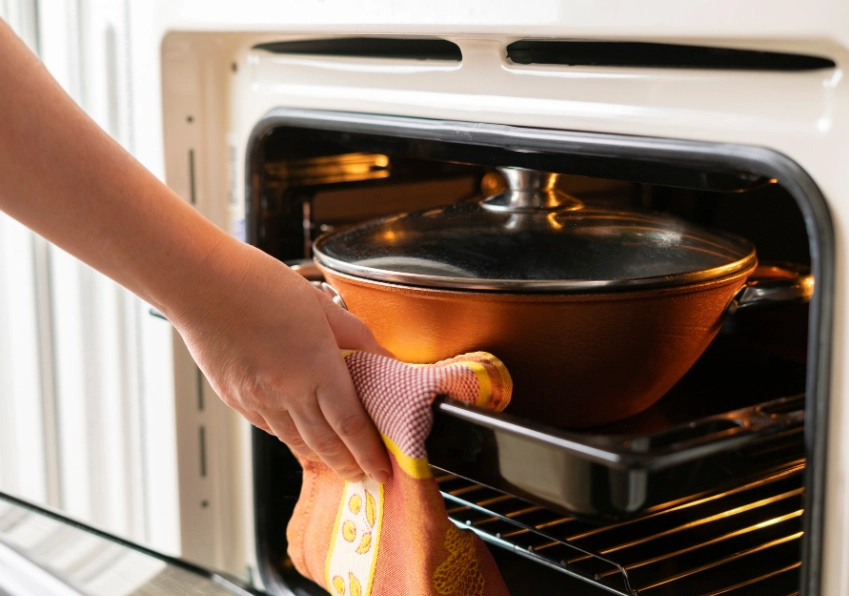
Step-by-Step: How to Cook Your Slow Cooker Recipe in the Oven
Let's walk through a real scenario. You planned to make "8-hour slow cooker pulled pork." It's 3 PM. Here's your salvage plan for dinner at 7 PM.
1. Choose the Right Pot and Prep
You need a heavy, oven-safe pot with a tight-fitting lid. A Dutch oven is ideal. Don't use a glass casserole dish with a foil lid for a long braise—the seal is poor, and you'll lose too much moisture. Brown your seasoned pork shoulder on all sides on the stovetop. This step is non-negotiable for flavor; the slow cooker lets you skip it, but the oven's shorter time needs that flavor foundation.
2. Adjust the Liquid
Slow cookers trap virtually all moisture. Ovens, especially at higher temps, allow more evaporation. For a 4-pound pork shoulder, I'd use about 1.5 cups of liquid (broth, cider, etc.) in the oven, whereas a slow cooker might only need 1 cup. The liquid should come about 1/3 to 1/2 way up the side of the meat, not submerge it.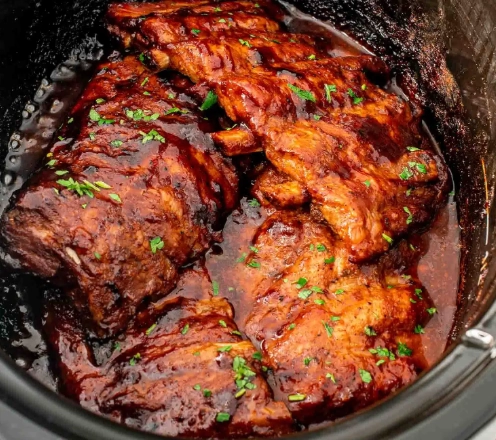
3. Set the Temperature and Timer
Refer to the chart. For that pork shoulder, go with 300°F. Set your timer for 3 hours. After 3 hours, start checking. Insert a meat thermometer into the thickest part, avoiding bone. If it's only at 180°F, re-cover and check every 30 minutes. Tenderness, not just temperature, is your guide. The meat should offer no resistance to a fork.
4. The Rest and Final Touch
Once done, let the meat rest in the pot, covered, for at least 20 minutes. This allows juices to redistribute. Then, shred. If your sauce seems too thin, you have a major advantage over the slow cooker: you can reduce it. Uncover the pot, place it on the stovetop, and simmer the sauce for 5-10 minutes to thicken it to a glaze-like consistency.
3 Common Conversion Mistakes (And How to Avoid Them)
I've eaten the results of these errors so you don't have to.
Mistake 1: Using the "Keep Warm" Setting as a Guide. Some people think if a slow cooker takes 8 hours on Low, and the oven's "Warm" setting is 170°F, that's the equivalent. It's not. "Warm" is for holding, not cooking. You'll be there for 12+ hours with unsafe food temperatures in the danger zone for far too long. Always use a cooking temperature of at least 300°F.
Mistake 2: Not Accounting for Evaporation. This is the dry roast tragedy. You pour in the exact cup of broth from the slow cooker recipe, cover it with foil (which doesn't seal as well as a lid), and 3 hours later you have beef jerky stuck to a dry pot. Add more liquid upfront (25-50% more), or be prepared to add a splash of hot liquid halfway through if it looks dry.
Mistake 3: Adding Dairy or Delicate Veggies Too Early. A slow cooker's gentle heat might handle cream or peas added at the start. An oven at 325°F will curdle cream and turn peas to mush. Stir in dairy, tender greens, or fresh herbs in the last 15-30 minutes of cooking, or even after you take it out of the oven.
Your Oven Conversion Questions, Answered
My slow cooker recipe doesn't specify a liquid amount. How much should I use in the oven?
For most braises, start with enough liquid to reach about one-third to halfway up the side of your main protein. For a standard 3-4 pound roast in a 5-quart Dutch oven, that's typically 1.5 to 2 cups of broth, wine, or a combination. The goal is to create a steamy environment, not to boil the meat. You can always add more hot liquid later if needed, but you can't take it out.
Can I put my ceramic slow cooker insert directly into the oven?
Check the manufacturer's instructions. Many modern stoneware inserts are oven-safe up to around 400°F, but the plastic lid is almost never oven-safe. If your insert is oven-safe, you can use it covered with a layer of heavy-duty foil. However, for best browning and heat distribution, a cast-iron or enameled cast-iron Dutch oven is superior. I once cracked a slow cooker insert by putting it under a broiler to brown—lesson learned.
How do I convert cooking times for vegetables in a stew?
Root vegetables (potatoes, carrots, parsnips) can handle the full braising time and become wonderfully tender. Softer vegetables (zucchini, bell peppers, mushrooms) will turn to mush. Add them during the last 45-60 minutes of oven time. For peas or spinach, stir them in after removing the pot from the oven; the residual heat is enough to cook them through.
Is there a way to make the oven cook even faster, like in an hour?
You can increase the temperature to 375°F or even 400°F, but you're shifting from braising to more of a roasting-with-sauce method. The meat won't become as fall-apart tender, and you must be vigilant about liquid levels to prevent burning. For a 3-pound chuck roast, at 375°F, check at 1.5 hours. It might be sliceable but not shreddable. For true "slow cooker" texture, the 2.5-4 hour range at 300°F-325°F is the sweet spot.
Where can I find official food safety temperatures for different meats?
Always refer to authoritative sources like the USDA's Food Safety and Inspection Service. They provide the latest safe minimum internal temperature guidelines. For braised meats destined for shredding, we exceed these minimums for texture, but it's crucial to know the safety baseline.
The bottom line is this: your oven is a powerful, precise tool that can absolutely stand in for a slow cooker. Don't fear the conversion. Embrace the control it gives you—to develop richer flavor through better browning, to adjust sauces on the fly, and to get a deeply satisfying meal on the table in half the time. Keep this guide bookmarked, and you'll never be stranded by a broken slow cooker again.
Reader Comments