You order a "molten chocolate cake" at a fancy restaurant. Your friend gets a "lava cake" at the bistro down the street. They look identical—a small, warm chocolate cake that spills a river of dark, liquid chocolate when you dig in with your spoon. So, what's the deal? Is this just chefs being pretentious with names, or is there a real, tangible difference between molten cake and lava cake?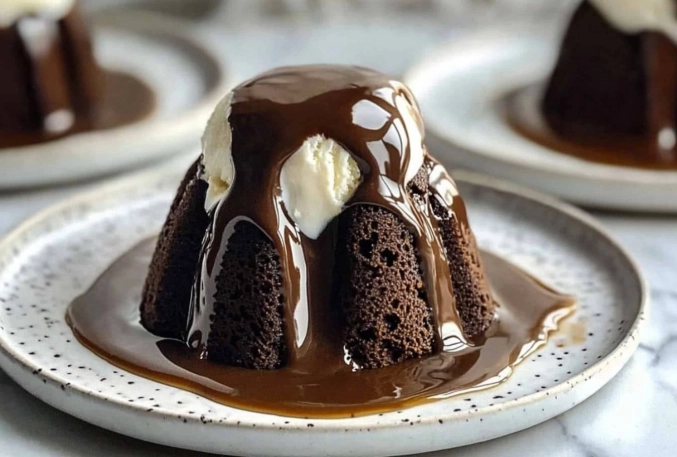
After working in pastry kitchens and testing more recipes than I care to admit, I can give you the short answer: they are essentially the same dessert in spirit, but the names point to different origins and slight philosophical approaches. The long answer, which is far more interesting, involves a famous chef's mistake, a global branding phenomenon, and some subtle technical details that can make or break your homemade version.
Most articles just repeat the same basic comparison. They miss the nuance, the history, and the practical tips that actually help you bake a better cake. Let's fix that.
What You'll Find Inside
- The One-Sentence Answer to the Core Confusion
- The Origin Story: A Chef's "Mistake" and Global Marketing
- How They Work: The Science of the Liquid Center
- Texture Showdown: Molten vs. Lava in Your Mouth
- Expert Tips for Baking the Perfect One at Home
- A Foolproof Recipe Template You Can Customize
- Your Common Questions, Answered
The One-Sentence Answer to the Core Confusion
Think of it like this: All lava cakes are molten cakes, but not all molten cakes are called lava cakes. "Molten chocolate cake" is the descriptive, technical term for the dessert category—a cake with a liquid or semi-liquid center. "Lava cake" is a specific, wildly successful branded name that became the popular catch-all term, much like "Kleenex" for tissues.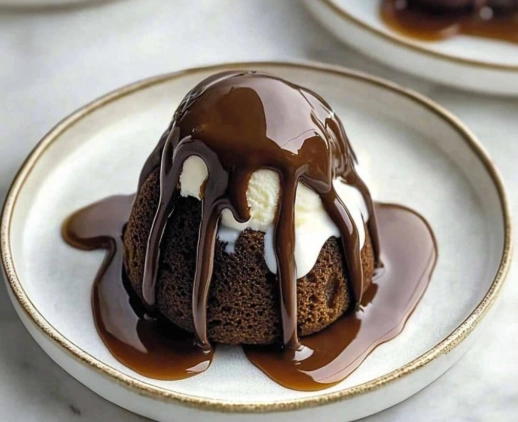
In practical terms today, if a menu says "molten chocolate cake," it often implies a slightly more refined, perhaps French-inspired version. If it says "chocolate lava cake," it's leaning into the familiar, dramatic, volcano-esque imagery. But the core construction is 99% identical.
The Origin Story: A Chef's "Mistake" and Global Marketing
This is where the paths diverge slightly. The creation myth—and I believe it—centers on the legendary French chef Jean-Georges Vongerichten.
In the 1980s, at his restaurant Lafayette in New York, he pulled individual chocolate sponge cakes out of the oven too early. Instead of a fully set cake, he found the centers were still deliciously liquid. He served it anyway, and a star was born. He called it "Chocolate Valrhona Cake" and later "Molten Chocolate Cake." This was the chef's creation, born from technique (or a happy accident).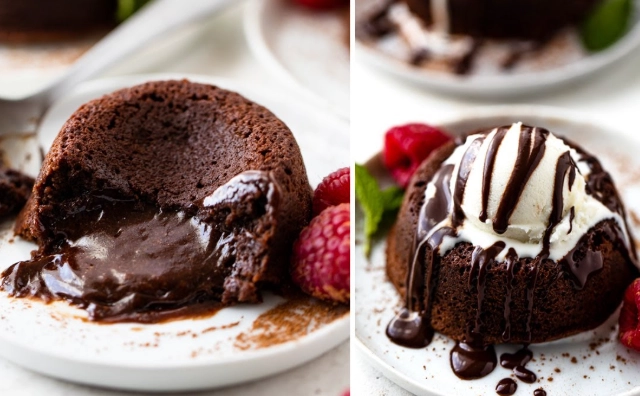
Enter the 1990s and the chain restaurant boom. A dish that was decadent, easy to execute in bulk, and had incredible visual appeal was a goldmine. The term "Lava Cake" was coined—almost certainly by marketers, not chefs—to describe that exact same dessert in a more exciting, visual way. It evoked a volcano erupting with chocolate. Chains like Chili's popularized it nationwide. The name "lava cake" stuck in the public consciousness because it's simply more fun to say.
Chef's Insight: In culinary school, we learned it as "moelleux au chocolat" (French for "soft chocolate cake") or "fondant au chocolat" (where "fondant" means "melting"). "Lava cake" was the term we used when talking to front-of-house staff because it sold better to customers. The recipe card in the kitchen, however, always said "molten."
How They Work: The Science of the Liquid Center
Both desserts rely on the same basic principle: controlled under-baking. You create a rich, high-fat batter that bakes from the outside in. The edges and top set into a delicate cake, while the center remains a thick, flowing custard.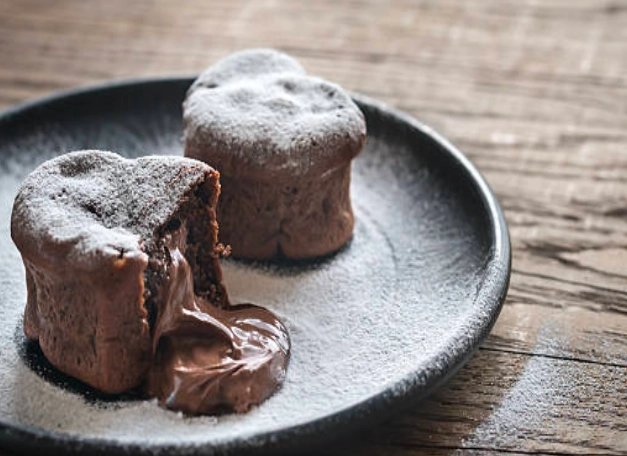
It's not a raw batter in the middle. The heat transforms it into a luxurious, velvety sauce. The key ingredients that make this possible:
- High Ratio of Chocolate & Butter to Flour: This is the biggest factor. A classic recipe might use 4-6 ounces of chocolate and a stick of butter to just a quarter cup of flour. The flour provides just enough structure to hold the shape, while the fat from the chocolate and butter stays fluid when warm.
- Eggs as the Binder: Whipped eggs (whole or yolks) give the batter body and richness, helping to emulsify the fat and create that custardy center.
- Precise Baking Time & Temperature: This is non-negotiable. A 425°F (220°C) oven for 10-12 minutes is the typical sweet spot. Two minutes too long, and you have a chocolate muffin. Two minutes too short, and it collapses into a puddle.
Texture Showdown: Molten vs. Lava in Your Mouth
Here’s a subtle distinction some chefs argue about. Because "molten" implies simply "liquid," and "lava" implies "thick, flowing liquid," the ideal texture can differ slightly.
| Aspect | Molten Chocolate Cake | Chocolate Lava Cake |
|---|---|---|
| Center Consistency | Often a wider spectrum. Can be a true liquid sauce or a thicker, pudding-like, barely-set custard. | Almost always leans toward the thicker, viscous flow of lava. The expectation is a dramatic, slow pour. |
| Cake Layer | Sometimes a bit more structured, with a finer crumb, resembling a true cake surrounding the center. | The cake layer can be intentionally thinner, almost like a shell, to maximize the lava effect. |
| Common Additions | Might feature a specific, high-end chocolate (e.g., "Valrhona Guanaja Molten Cake"). | Often paired with generic "vanilla ice cream" and a dusting of powdered sugar for the classic chain-restaurant look. |
| Mindset | Focus on the quality of chocolate and the balance of textures. | Focus on the theatrical "wow" moment of cutting it open. |
But here’s where things get messy. In your home kitchen, you're just aiming for that perfect, delicious middle ground. The name on your recipe matters less than the technique.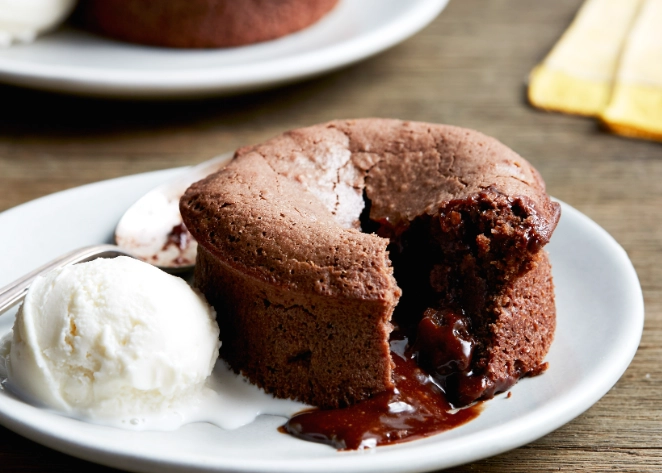
Expert Tips for Baking the Perfect One at Home
I've seen every mistake. Here’s what most recipes and bloggers don't tell you.
1. Your Oven Lies. This is the #1 reason for failure. Home ovens are notoriously inaccurate. If your oven runs 25 degrees hot, your 12-minute bake will fully cook the center. Buy an oven thermometer. It's the best $7 you'll spend for baking.
2. Ramekin Choice Matters. Light-colored ceramic ramekins heat more gently than dark metal ones. If using dark metal, reduce the bake time by 1-2 minutes. Always, always butter and flour the ramekins incredibly well. Use melted butter and a pastry brush to get into every crevice, then dust with cocoa powder instead of flour to avoid a white coating on your chocolate cake.
3. The Batter Must Be Room Temp. If you pour cold batter from the fridge into a hot ramekin, the outside will start cooking too fast while the center is still ice-cold, leading to an uneven bake. Make your batter ahead if you want, but let it sit on the counter for 30 minutes before baking.
4. Don't Over-mix After Adding Flour. Once you fold in the flour, stop as soon as no dry streaks remain. Over-mixing develops gluten, making the cake layer tough and chewy instead of tender and delicate.
Pro Disaster Story: For a dinner party once, I tried to be clever and put a solid ball of frozen ganache in the center of each cake, promising a "surprise lava core." The frozen center never warmed up, creating a cold, hard chunk in the middle of a warm cake. It was awful. Stick to the simple, reliable under-baked batter method.
A Foolproof Recipe Template You Can Customize
Forget exact grams for a second. Remember this ratio, and you can scale it up or down forever: Equal parts by weight: chocolate, butter, eggs, sugar. Half-part flour.
So for 4 servings: 4 oz (115g) good dark chocolate, 4 oz (115g) unsalted butter, 2 large eggs (approx 4 oz out of shell), 4 oz (115g) sugar, 2 oz (30g) all-purpose flour. Pinch of salt.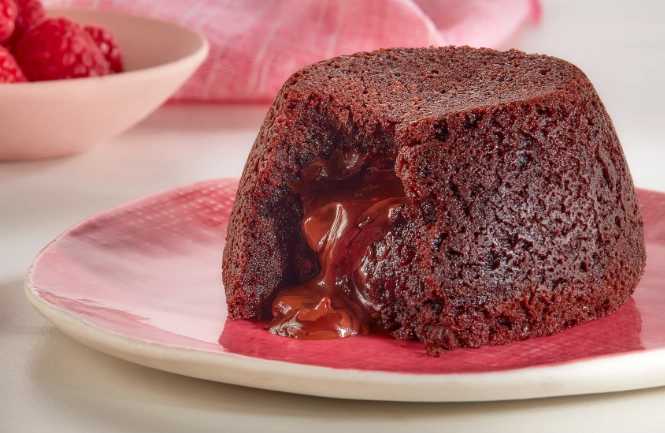
Method: Melt chocolate and butter together. Whisk eggs and sugar until slightly pale. Whisk in chocolate mixture. Fold in flour and salt. Divide into 4 prepared ramekins. Bake at 425°F (220°C) on a baking sheet for 10-12 minutes. The tops should be set and dry, but the cakes should jiggle slightly when shaken. Let rest 1 minute, then invert onto plates.
Customize it: Add a teaspoon of instant espresso to the chocolate. Use a orange liqueur. Swap 1 oz of the flour for ground almonds. The template is your playground.
Your Common Questions, Answered
So, the next time you see both terms on a menu, you'll know the secret. It's less about a fundamental recipe difference and more about culinary heritage versus popular branding. Whether you call it molten, lava, or moelleux, the goal is the same: that unforgettable moment when your spoon breaks through a delicate cake shell into a river of warm, luxurious chocolate. Now you have the knowledge to not only order it with confidence but to master it in your own kitchen.
Reader Comments