Quick Navigation
Let's be honest. The idea of simmering a pot of spaghetti sauce on the stove for hours sounds romantic, like a scene from a classic Italian film. But in reality? It's a commitment. You're tied to the kitchen, stirring every twenty minutes, worrying about scorching the bottom, and adjusting the heat more times than you can count. What if I told you there's a way to get that same deep, developed flavor—maybe even better—without being a kitchen hostage? That's the magic of a spaghetti sauce slow cooker.
I stumbled into this method almost by accident. A busy weekend, a craving for a proper meat sauce, and zero desire to babysit a pot. I threw everything into my slow cooker, set it on low, and forgot about it for eight hours. The result was a revelation. The sauce wasn't just good; it was transformative. The flavors had married in a way my rushed stovetop versions never achieved. The tomatoes had sweetened and mellowed, the herbs had infused every molecule, and the meat was fall-apart tender.
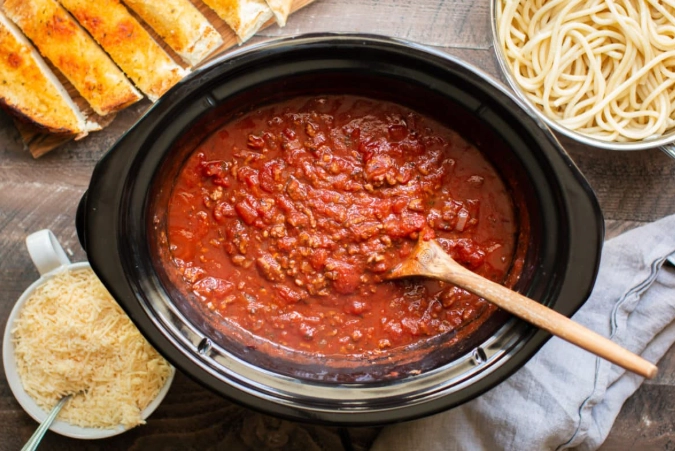 The slow cooker doesn't just cook sauce; it coaxes flavor out of it.
This isn't about being lazy (though it is wonderfully convenient). It's about understanding how low, steady heat works on food. It breaks down tough fibers in meat without toughening them. It gently reduces liquids without the risk of burning. It allows volatile flavors in garlic and herbs to permeate the entire dish rather than cook off quickly. For a spaghetti sauce slow cooker recipe, this environment is perfection.
The Foundation: Choosing Your Ingredients for Slow Cooker Success
You can't build a great house on a weak foundation, and the same goes for your slow cooker spaghetti sauce. The beauty here is simplicity, but each component matters more because they have so much time to interact.
The Tomato Talk: Canned vs. Fresh, Crushed vs. Puree
This is where most debates start. For a spaghetti sauce slow cooker method, I'm firmly in the canned tomato camp. Why? Consistency and concentration. Good-quality canned tomatoes are picked and packed at peak ripeness. Fresh tomatoes, unless they're in-season and perfect, can be watery and lack depth. You're looking for richness, and canned tomatoes deliver that base reliably.
But what type? Here's a quick breakdown that saved me from many a mediocre sauce:
| Tomato Type | Best For | My Personal Preference & Why |
|---|---|---|
| Crushed Tomatoes | The ideal all-rounder. Good body, some texture. | My go-to. It gives you a sauce with substance right from the start without being too thick or too thin. |
| Whole Peeled Tomatoes | When you want ultimate control. Crush them by hand for rustic texture. | Great for a chunky, "Sunday gravy" style sauce. Feels more hands-on, but sometimes I just can't be bothered. |
| Tomato Puree or Passata | A very smooth, silky sauce base. | I find it can sometimes lean towards a "baby food" texture if used alone. I often mix it with crushed. |
| Tomato Paste | NOT a base. A flavor concentrator. | Non-negotiable. A tablespoon or two, fried off with the onions, adds an incredible umami depth. Don't skip it. |
See? It's not just about grabbing a can. Your choice sets the stage. For an easy spaghetti sauce slow cooker approach, starting with a can of good crushed tomatoes (like San Marzano if you want to splurge) is your safest, most rewarding bet.
Beyond Tomatoes: The Flavor Builders
The tomatoes are the star, but the supporting cast makes the show. Onions and garlic are non-negotiable. I prefer a fine dice for the onions so they melt into the sauce completely over the long cook. Garlic? Minced is fine, but if you're sensitive to its sharpness, try slicing it. It gives a milder, sweeter garlic flavor that blends beautifully.
Herbs are where you can really play. Dried oregano and basil are classics for a reason—they stand up well to long cooking. But here's my twist: add half of your dried herbs at the beginning, and stir in the other half during the last 30 minutes of cooking. The early addition infuses the base flavor, the late addition gives a brighter, fresher top note. If you're using fresh herbs (which are fantastic), add them almost entirely at the end. Long cooking will turn fresh basil into a sad, brown, flavorless ghost of itself.
And the meat? Ground beef, Italian sausage (casings removed), or a mix. Some recipes say you can just dump raw meat in. Technically, it will cook through. But for flavor and texture? Please, take the extra ten minutes to brown it. That Maillard reaction (the browning) creates hundreds of new flavor compounds that simply won't develop in the wet environment of the slow cooker. It's the difference between boiled meat and savory, complex meat. Trust me on this.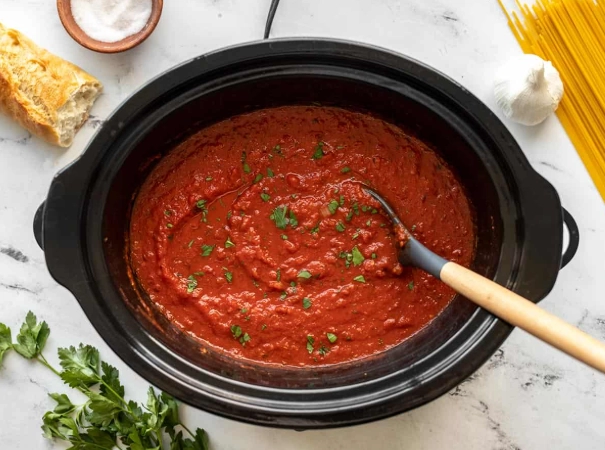
The No-Stress, Step-by-Step Slow Cooker Spaghetti Sauce Method
Okay, let's get into the actual process. This isn't a rigid recipe; it's a framework. A template for the best spaghetti sauce slow cooker can produce.
Step 1: The Sauté (The Only "Real" Cooking You'll Do). In a skillet, heat a bit of olive oil. Add your diced onion and cook until soft and translucent. Add the garlic for the last minute—don't let it burn, or it turns bitter. Now, push the onions and garlic to the side and add your meat. Break it up and cook until well-browned, not just gray. This is the moment. If you're using tomato paste, make a space in the center of the pan, add it, and let it fry for a minute until it darkens slightly and smells fragrant. This cooks out the tinny taste and deepens its flavor.
Step 2: The Dump (The Fun Part). Transfer the meat and onion mixture to your slow cooker. Now, add your canned tomatoes. If using whole tomatoes, crush them with your hands as you add them—it's oddly satisfying. Add your first half of dried herbs, a bay leaf or two, a pinch of red pepper flakes if you like heat, and any other seasonings. Give it a good stir.
Step 3: The Wait (The Hardest Part?). Set your slow cooker. Low for 7-8 hours is the golden rule for the best spaghetti sauce slow cooker results. High for 3-4 hours can work in a pinch, but the low-and-slow method truly allows the flavors to develop and meld. The gentle heat coaxes the sweetness from the tomatoes and tenderizes the meat perfectly.
Step 4: The Finish (Where Magic Happens). About 30 minutes before serving, lift the lid. This is your quality control moment. Taste. Is it too acidic? A tiny pinch of sugar or a grated carrot can help. Needs more salt? Add it now. Stir in the second half of your dried herbs. If using fresh herbs like basil or parsley, chop and stir them in now. If there's excess fat on the surface, you can skim it off with a spoon. For a richer, silkier texture, stir in a tablespoon or two of good olive oil or a small knob of butter right at the end. It adds a lovely sheen and rounds out the flavors.
That's it. The most hands-off, flavorful spaghetti sauce you'll likely ever make.
Common Variables & Tweaks: Making the Sauce Your Own
The basic spaghetti sauce slow cooker template is forgiving. Here's where you can customize:
- The Meat: Try a mix of beef and pork. Add some chopped pancetta to the browning step for a smoky depth. For a meatless version, brown mushrooms (cremini or portobello) until they release their water and get crispy—they add a fantastic meaty texture.
- The Veg: The classic "soffritto" of onion, carrot, and celery (all finely diced) is a fantastic base. The carrot adds a natural sweetness. Bell peppers, finely chopped, work well too. Just sauté them with the onions.
- The Herbs: Beyond oregano and basil, try a sprig of fresh rosemary (remove before serving) or a pinch of dried thyme. A Parmesan rind tossed into the slow cooker adds an incredible savory, umami backbone—just fish it out at the end.
- The Liquid: As mentioned, red wine is brilliant. Use one you'd actually drink. A splash of balsamic vinegar added at the end can brighten and deepen the flavor in a surprising way.
Why This Method Beats the Stove, Every Time
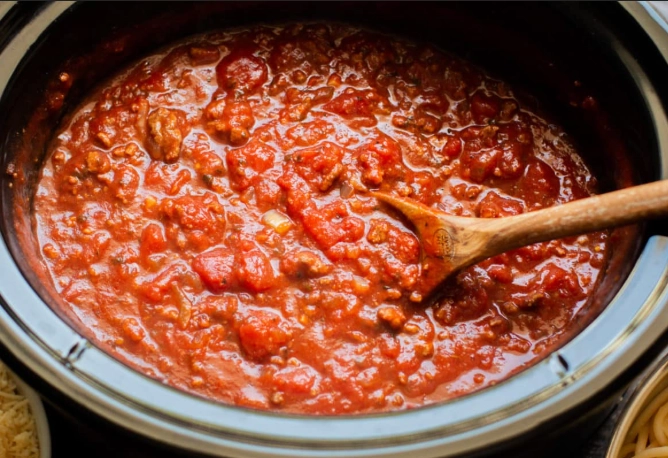
It's not just about convenience, though that's huge. Think about a stovetop simmer. The heat comes from the bottom, so you get a hot spot. You have to stir to prevent sticking and burning. The evaporation is more aggressive at the surface. In a slow cooker, the heat wraps around the entire ceramic insert. It's an even, gentle, all-over simmer. There's no hot spot to scorch your precious sauce. The reduction happens slowly and evenly. This consistent environment is why a spaghetti sauce cooked in a slow cooker often has a more integrated, mellow, and complex flavor profile than its stovetop cousin. It's science, not just laziness.
Your Spaghetti Sauce Slow Cooker Questions, Answered
Beyond Spaghetti: What Else Can This Sauce Do?
Calling this just a "spaghetti sauce" sells it short. It's a versatile meat-and-tomato ragu. Once you have a batch of this best spaghetti sauce slow cooker creation, your dinner options explode.
- Lasagna Layer: Use it as the meat sauce in your next lasagna. No extra cooking needed.
- Hearty Bakes: Mix it with cooked rigatoni or ziti, top with cheese, and bake until bubbly.
- Meatball Sub Savior: Simmer store-bought or homemade meatballs in the sauce for an hour on the stove for an incredible sub filling.
- Shakshuka Twist: Heat a portion in a skillet, make wells, and crack in eggs. Cover and cook until the eggs are set for a fantastic brunch.
- Soup Starter: Thin a portion with some beef or vegetable broth, add some cooked beans and greens, and you've got a quick, hearty soup.
The point is, this isn't a single-use recipe. It's a kitchen staple you make in bulk. When you realize how easy an easy spaghetti sauce slow cooker method can be, you start seeing it as a fundamental ingredient, not just a topping.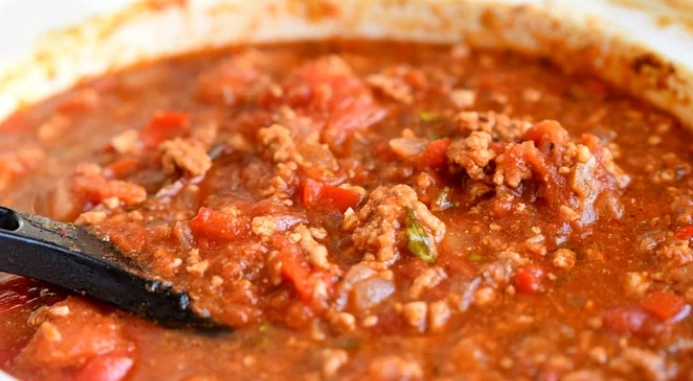
So, give it a shot. Grab your onions, your meat, your best can of tomatoes, and your slow cooker. Embrace the low heat and the long wait. The first time you taste that deep, rich, perfectly melded sauce, you'll understand why so many people are ditching the stove for this set-and-forget method. Your spaghetti sauce slow cooker journey starts with one simple step: browning those onions.
Now, go get simmering.
Reader Comments