Your Stew Guide: Quick Navigation
Let's be real. Sometimes you just want a hearty, comforting beef stew without facing a grocery list longer than your arm. You know the feeling? You're tired, maybe it's chilly out, and the thought of chopping fifteen different vegetables is just... no. Absolutely not.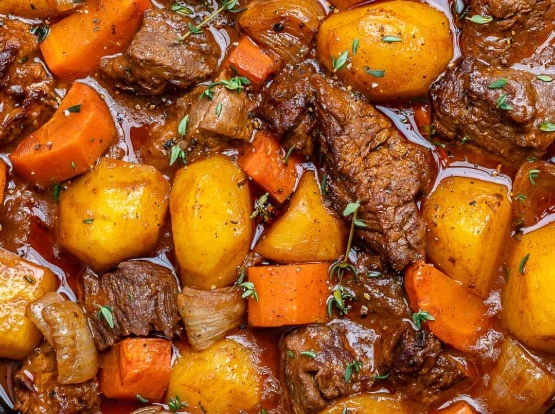
That's where this whole idea came from. I used to think a good stew needed a pantry raid. Wine, fancy broth, a dozen herbs. Then one night, I had nothing but the basics. Chuck roast, an onion, a couple of carrots, potatoes, and the usual salt, pepper, flour. I threw it together with a sigh, expecting a bland result.
Boy, was I wrong.
What came out of the oven hours later was a revelation. Deep, rich, savory, with fall-apart tender beef. It was, without a doubt, one of the best stews I'd ever made. And it used maybe six core ingredients. That's the magic of a truly easy beef stew recipe with few ingredients. It proves flavor doesn't come from complexity; it comes from technique and time.
So, if you're searching for a simple beef stew that delivers big on comfort with minimal fuss, you've landed in the right spot. This isn't just a recipe; it's a blueprint for a no-stress, supremely satisfying meal.
Why a Minimalist Beef Stew Actually Tastes Better
You might be skeptical. Fewer ingredients mean less flavor, right? In many cases, yes. But stew is different. Stew is an alchemical process where a handful of humble components transform over slow, wet heat.
Think about it. A rich beef broth from a carton is great, but when you brown beef cubes properly, you create a fond—those crispy, dark bits stuck to the pot. Deglazing that with water and letting it simmer for hours creates its own complex broth. The onions melt into sweetness. The carrots and potatoes release their starches, naturally thickening the gravy. The beef's collagen breaks down into gelatin, giving the stew that luxurious, lip-sticking body.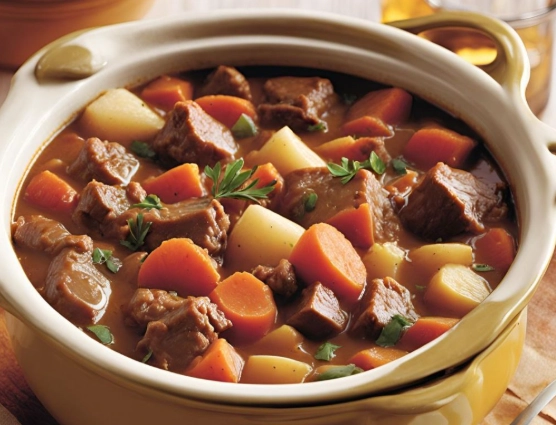
Adding a bunch of extra stuff—mushrooms, peas, celery, tomatoes, wine—can be wonderful, but it also muddies the pure, deep essence of beef and root vegetables. This easy beef stew with few ingredients is about celebrating that essence. It's clear, direct, and incredibly satisfying.
A quick confession: I've made fancy stews with red wine and bacon. They're delicious. But this simple version is the one I make 9 times out of 10. It's the workhorse. The weeknight hero (well, weekend hero since it takes time). The flavor is just so clean and beefy.
The Non-Negotiable Core Ingredients (And Why They Matter)
Here's the beautiful part. For this easy beef stew recipe with few ingredients, you can count your must-haves on one hand. The rest is seasoning.
The Beef: Chuck Roast is King
Do not, I repeat, do not use lean stew meat from the supermarket. It will turn out dry and tough. You need a cut with marbling and connective tissue. Chuck roast (from the shoulder) is perfect and widely available. As it cooks low and slow, the fat renders, and the tough collagen melts into silky gelatin, making the meat incredibly tender and flavoring the whole pot.
According to the U.S. Department of Agriculture, beef chuck is a primary source for these flavorful, economical cuts ideal for braising. It's the foundation.
The Holy Trinity of Vegetables
Onion, carrot, potato. That's it. Yellow onion for a solid aromatic base. Carrots for sweetness and color. Potatoes (Yukon Gold are my favorite) for heartiness and to thicken the stew. They break down a bit at the edges, releasing starch.
You can add others, but these three are the pillars. They're cheap, they store well, and they create a perfect harmony.
The Liquid: Water is Fine. Really.
This might be the most surprising part. You don't need beef broth. The browning of the beef and vegetables, plus the long cook time, creates an intensely beefy liquid. Using water lets that pure flavor shine through without the salt and sometimes artificial flavors of some store-bought broths. If you have homemade stock, by all means use it. But don't stress if you don't.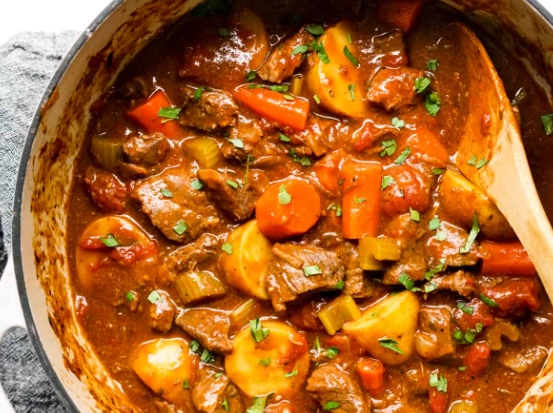
The Thickener: Just Flour
Tossing the beef cubes in flour before browning does two things: it promotes a beautiful, dark crust (more flavor!), and the flour dissolves into the cooking liquid, thickening it into a gravy as it simmers. No cornstarch slurry needed later.
Pro Tip: For a gluten-free version, you can dust the beef with a gluten-free flour blend or even skip the flour altogether. The stew will be thinner but still delicious—the potatoes will do some thickening.
The Step-by-Step: How to Make This Simple Beef Stew
Okay, let's get into the kitchen. This process is more about patience than skill.
First, cut your chuck roast into 1.5 to 2-inch cubes. Pat them very dry with paper towels. This is crucial for getting a good sear, not a steam. Toss the dry cubes in a bowl with some all-purpose flour, salt, and black pepper.
Now, heat a couple tablespoons of oil in a heavy-bottomed pot or Dutch oven over medium-high heat. Don't crowd the pan. Brown the beef in batches. This takes about 5-7 minutes per batch. You're not cooking them through, just getting a deep brown crust on multiple sides. This step is non-negotiable for flavor. Those brown bits are gold.
Be patient here. It makes all the difference.
Remove the beef, and if needed, add a bit more oil. Toss in your chopped onion and cook until softened and a bit translucent, maybe 5 minutes. Then add the carrots (cut into chunks) and cook for another 2-3 minutes. You're building layers.
Now, put all the beef back into the pot. Add enough water (or stock) to just barely cover the meat and vegetables. Bring it to a very gentle simmer. This is key: a bubbling simmer, not a rolling boil. Boiling will make the beef tough.
Now, cover the pot with the lid slightly ajar, reduce the heat to low, and walk away. For at least 2 hours. Go read a book, watch a show. Just give it time.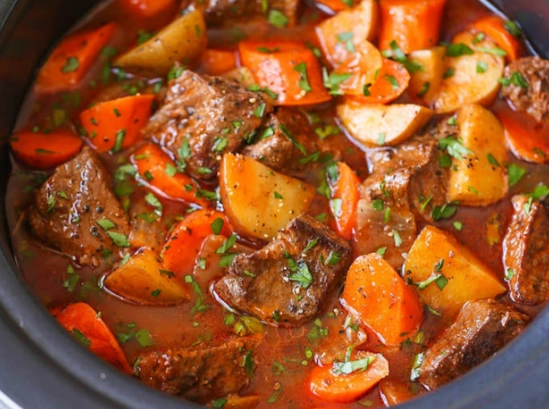
After 2 hours, check the beef. It should be starting to get tender. Now add your potato chunks. They go in later so they don't completely disintegrate. Cover again and simmer for another 45 minutes to an hour, until both the beef and potatoes are fork-tender.
Finally, taste. This is where you adjust. It will likely need more salt and pepper. Sometimes I add a splash of Worcestershire sauce or a pinch of dried thyme here, but it's honestly great with just S&P.
Common Mistake: Underseasoning at the end. Stews need salt to bring all those deep flavors forward. Add a little, stir, taste. Repeat until it sings.
Stovetop vs. Oven vs. Slow Cooker: What's Best?
I prefer the oven or a very low stovetop for even, gentle heat. But let's break down your options for this easy beef stew recipe with few ingredients.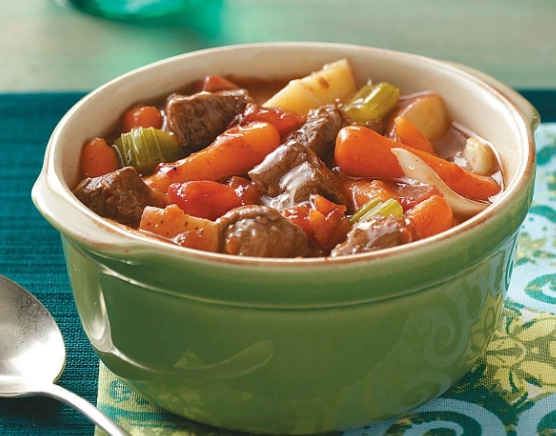
| Method | How-To | Pros | Cons |
|---|---|---|---|
| Stovetop | Brown meat/veg on stove, then simmer on lowest heat with lid ajar for 2.5-3 hrs. | Most accessible. Easy to check progress. | Requires monitoring to maintain low simmer. Heat can be uneven. |
| Oven | Brown on stove, then cover pot and transfer to a 300°F (150°C) oven for 2.5-3 hrs. | Most consistent, hands-off heat. Excellent browning on top. | Requires oven-safe pot (Dutch oven). |
| Slow Cooker | Brown meat/veg (highly recommended), then add everything to cooker on Low for 7-8 hrs. | Ultra hands-off. Great for all-day cooking. | Can result in more boiled texture if not browned first. Liquid doesn't reduce much. |
My personal ranking? Oven first, then stovetop, then slow cooker. The oven's ambient heat is just foolproof for tender meat.
Answering Your Beef Stew Questions (The FAQ)
I get a lot of questions about this simple beef stew. Let's tackle the big ones.
Can I really make a good stew with just water?
Yes, you absolutely can. The magic is in the browning (the Maillard reaction, if you want the science) and the long cook time. The beef and vegetables infuse the water with incredible flavor. Try it once. If you find it lacking, use broth next time. But I bet you'll be surprised.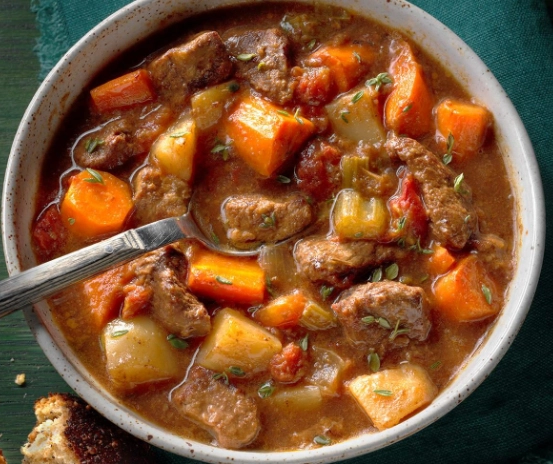
My stew is too thin / too thick. Help!
Too thin? Uncover the pot for the last 20-30 minutes of cooking and let it simmer more vigorously. The liquid will reduce and thicken. You can also mash a few potato pieces against the side of the pot to release their starch.
Too thick? This is easier. Just stir in a bit more hot water or broth until it reaches your preferred consistency.
What's the best way to store and reheat leftovers?
Stew is arguably better the next day. Let it cool, then store it in an airtight container in the fridge for up to 4 days. Reheat gently on the stovetop over low heat, adding a splash of water if it's gotten too thick. It also freezes beautifully for up to 3 months. Portion it into freezer-safe containers for easy future meals.
Is this a healthy beef stew recipe?
It's made from whole, single-ingredient foods: beef, vegetables, water, basic seasoning. That's a great start. It's hearty and filling. To make it leaner, you can trim more visible fat from the chuck roast before cooking. The Mayo Clinic notes that balanced meals with lean protein and vegetables are a cornerstone of healthy eating. Just be mindful of portion size, as it is a calorie-dense meal.
The Bottom Line: This easy beef stew recipe with few ingredients proves that you don't need a laundry list of items to create deep, comforting flavor. It's about choosing the right core components and treating them with care—mainly, with time.
When a Simple Recipe is the Best Recipe
In a world of complicated recipes with niche ingredients, there's something deeply reassuring about a pot of stew that asks for almost nothing yet gives you everything. It's the culinary equivalent of a warm blanket.
This approach—focusing on technique over ingredients—is how generations cooked before global supermarkets. It's resilient cooking. It's the kind of easy beef stew recipe with few ingredients that you can memorize and make without thinking, which is the highest compliment a home cook can give a dish.
So next time you're staring into the fridge feeling uninspired, remember: chuck roast, onion, carrot, potato, water, time. That's it. That's the secret to a meal that feels like a hug.
Give it a shot. I think you'll find that this simple beef stew becomes a regular in your rotation, not because it's easy (which it is), but because it's genuinely, deeply good.
Reader Comments